


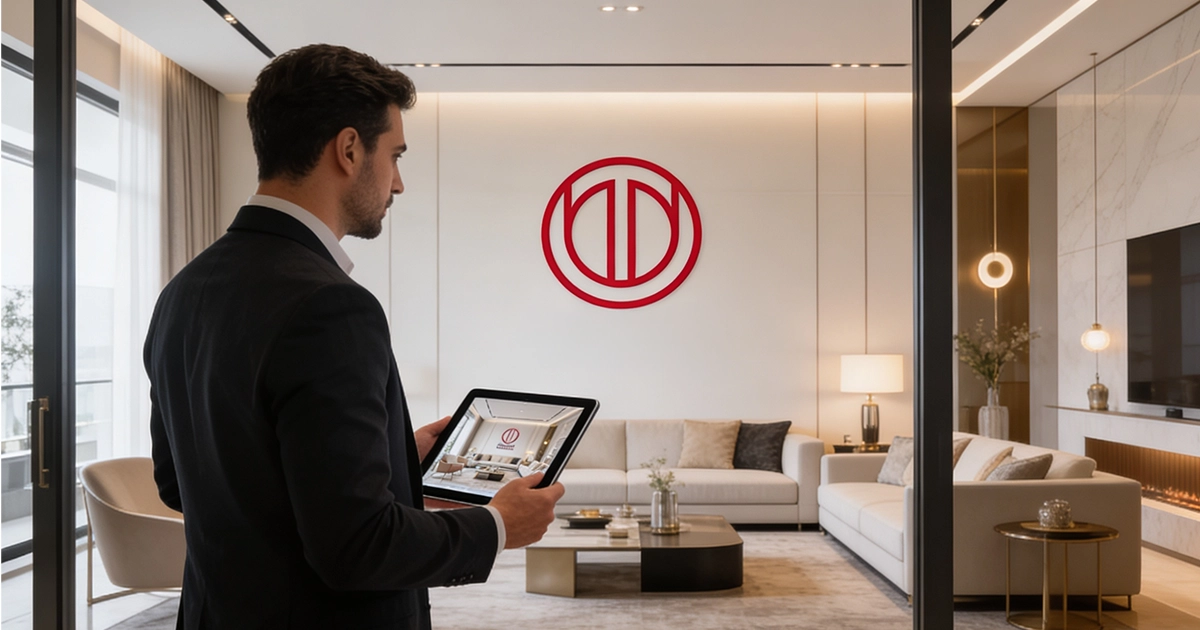
It is often said that “man is a product of his environment.” However, this environment is not limited to nature or society; it also includes the spaces in which we live daily, such as the home, the office, or any place where we spend our time.
The quality of interior design is not merely a matter of aesthetics or decoration. It directly influences an individual’s psychological state: their comfort, stress levels, perception of space, and sense of harmony. A well-designed space promotes calmness and well-being, while a poorly organized layout can generate tension and discomfort.
At Omran TRK, we are fully aware of this reality. That is why we do not view real estate as just a collection of walls and spaces, but as a fully integrated living environment. In all our projects, we place special emphasis on location selection, architectural design, space distribution, and post-handover residential management, in order to sustainably enhance the residents’ quality of life.
Interior design as a psychological environment
When we enter a space, our senses immediately begin to analyze its details: colors, lighting, movement flow, window sizes, material textures, and the way rooms are connected.
All of these elements send indirect signals to the brain. A poorly designed space may create visual overload, which the mind translates into stress or discomfort. In contrast, a well-balanced and thoughtfully designed environment promotes serenity, balance, and well-being.
For this reason, interior design is no longer a secondary element, but a fundamental factor in residential quality of life. The walls of a home are not just physical boundaries; they define our daily life, mood, and emotional stability.
What is psychological design?
Psychological design, also known as Design Psychology, is the field that studies the relationship between space, human behavior, and emotions.
It is not only about choosing elegant furniture or beautiful colors, but about understanding how space affects people: how they move, how they feel, whether the environment creates comfort or stress, and whether it supports focus and relaxation or increases confusion.
A successful psychological design can make a small room feel more spacious and open, while a poor design can turn a large space into an uncomfortable or impractical area.
Natural lighting, color choices, circulation flow, and spatial organization all play a key role in improving quality of life and creating a sense of stability.
The balance between comfort and aesthetics
A common mistake is to reduce interior design to its visual appearance. However, beauty alone is not enough.
A space may look stunning in photos but be uncomfortable in daily use. An apartment may be spacious but poorly organized. A luxurious design may still fail to match the lifestyle of its residents.
A successful design is therefore one that balances aesthetics and functionality: a space must be both beautiful, practical, and comfortable.
This is the approach adopted by Omran TRK in its projects, offering properties that combine investment value with quality of life through careful attention to space planning, location, and services.
Omran TRK: real estate as an integrated living experience
In Omran TRK projects, housing is seen as a complete living experience that begins with the choice of location and continues long after delivery.
Beyond simply providing a home, residents need an environment that ensures safety, comfort, and simplicity in everyday life. That is why special attention is given to planning, common areas, facilities, views, accessibility, and residential management.
These details, though sometimes subtle, have a real impact on quality of life. A well-designed home is not just a living space; it creates a sense of stability and belonging.
Interior design as an investment in quality of life
When purchasing real estate, price, location, and size are essential criteria. However, they are not sufficient on their own.
A successful property is one that combines investment value with quality of life. It must meet today’s needs while maintaining its value in the future.
Interior design and architectural planning play a central role here. A well-designed home improves daily comfort, increases attractiveness, and enhances market value.
Thus, investing in well-designed spaces means investing both in personal well-being and financial assets.
The art of managing emotions through space
Among the companies that view decoration as a tool for managing emotions within space, Altın Tay Dekor stands out for its human-centered and psychological approach to interior design.
With more than 25 years of experience, the company studies each client’s personality and lifestyle before designing a project. It aims to create a balance between aesthetics, functionality, and emotional comfort, ensuring that each space is truly adapted to everyday living.
A home is not just a place of residence; it is the environment where daily life is shaped. Every color, every window, every corner, and every circulation path influences mood and emotional well-being.
At Omran TRK, we believe that real estate should not be measured only by square meters or façade design, but by the quality of life it offers: comfort, security, and harmony.
Conclusion
Choosing a home means choosing a way of life.
A well-designed house is not just a place to live, but an environment that supports human balance and delivers positive energy every day.


Join The Discussion