


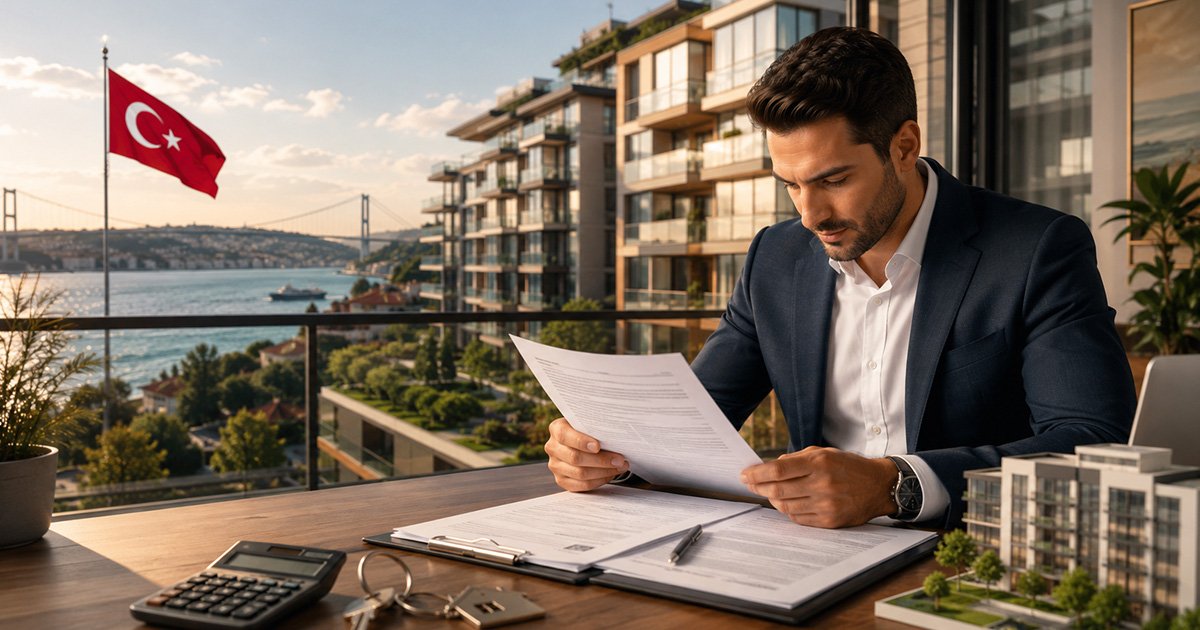
When considering buying property in Turkey, many buyers from Arab countries focus only on the price of the apartment or villa. However, a sound real estate decision does not depend on the base price alone. There are several taxes, fees, and administrative costs that should be understood before signing the contract or transferring ownership.
Knowing these details helps buyers set a clear budget, avoid surprises, and make a safer purchasing decision. Therefore, it is important for investors or families looking for housing in Turkey to understand the costs associated with the buying process from the beginning.
First: Title Deed Fees When Buying Property
Title deed fees are among the most important fees paid when transferring property ownership in Turkey. These are the official fees for registering the property in the name of the new owner at the Land Registry Office.
According to the guide of the Turkish Land Registry and Cadastre, title deed fees in a sale transaction are calculated as 20 per thousand from the seller and 20 per thousand from the buyer based on the declared sale value. This equals a total of 4% of the registered property value, provided that the declared value is not lower than the municipal value.
In some transactions, the buyer and seller may agree on how these fees will be paid. For this reason, it is important to clarify this point before signing the contract.
Second: Land Registry Office and Administrative Service Fees
In addition to title deed fees, there are administrative fees related to registration and ownership transfer procedures, such as service fees and transaction-related charges at the Land Registry Office.
These fees vary depending on the type of transaction, the location of the property, and the official tariff applied in that year. The General Directorate of Land Registry and Cadastre announced that the service fee tariff for 2026 started to be applied as of 01.01.2026.
These fees are usually not large compared to the value of the property, but they are still part of the expenses that should be included in the purchase budget.
Third: Value Added Tax — VAT / KDV
Value Added Tax in Turkey may apply to certain properties, especially when buying a new property from a construction company or real estate developer. The tax rate may vary depending on the type of property, its size, its location, and the nature of the seller.
However, in some cases, foreigners may benefit from a VAT exemption when purchasing a residence or office in Turkey, provided that specific conditions are met. The Turkish Revenue Administration indicates that VAT exemption for the sale of residences or offices to foreigners falls under Article 13/i of the Value Added Tax Law, with conditions related to payment method, payment timing, and official procedures.
Therefore, it cannot be said that every foreign buyer is automatically exempt from this tax. The property status, type of sale, seller, and payment method must be reviewed before calculating the final budget.
Fourth: Compulsory Earthquake Insurance — DASK
In Turkey, compulsory earthquake insurance, known as DASK, is one of the essential requirements related to residential properties.
The insurance premium is paid annually, and its value varies depending on the size of the property, its location, and the type of construction. The Natural Catastrophe Insurance Institution explains that DASK premiums are paid in cash and in advance, and are updated annually in line with changes in square-meter construction costs.
This insurance is important not only from a legal perspective, but also because it reflects the importance of taking property safety seriously in Turkey, especially when buying for family living.
Fifth: Annual Property Tax
After owning a property, the owner pays an annual property tax to the municipality. The amount of this tax varies depending on the type and location of the property, whether it is a residence, office, land, or land designated for construction.
According to the Turkish Revenue Administration, the property tax rate for residential buildings is generally 1 per thousand, while it is 2 per thousand for other buildings, 1 per thousand for land, and 3 per thousand for land designated for construction, with doubled rates applied within metropolitan municipality boundaries.
This tax is generally considered a relatively small annual expense, but it is important for every property owner in Turkey and should be taken into account.
Sixth: Monthly Maintenance Fees Inside Residential Complexes
If the property is located inside a residential complex, there are monthly fees commonly known as aidat. These fees are used to cover management costs, security, cleaning, elevator maintenance, gardens, swimming pools, and shared facilities.
The amount of these monthly fees varies from one project to another depending on the size of the complex and the services available. Complexes with extensive social facilities usually have higher fees than regular buildings, but in return, they provide residents with a more comfortable lifestyle and help preserve the overall value of the project.
For this reason, when buying property inside a residential complex, it is important to ask the developer or management about the value of the monthly fees and how services will be organized after delivery.
Seventh: Utility Connection and Service Costs
After purchasing the property, the owner may need to pay certain costs related to opening or transferring electricity, water, gas, and internet subscriptions.
These expenses vary depending on the city, service providers, and the type of property. Although these fees are not large compared to the property price, they are practical costs that appear immediately after purchase, especially if the property is new or will be occupied for the first time.
Eighth: Translation, Notary, and Consultation Costs
For buyers coming from Arab countries, there may be a need to translate passports, notarize certain documents, open a bank account, obtain a tax number, or receive legal consultation before purchase.
These costs vary depending on the file, the number of people, the type of documents, and the purpose of the purchase, whether it is only for residence or for applying for Turkish citizenship.
Having a reliable company to help the client organize these steps saves a great deal of time and reduces the possibility of procedural mistakes.
Ninth: Are There Taxes When Selling the Property Later?
If the owner decides to sell the property after a period of ownership, some tax obligations related to capital gain may arise, especially if the sale takes place within a certain period from the date of acquisition.
The Turkish Revenue Administration explains in its guide on real estate sales that gains resulting from the sale of property within five years may be subject to real estate capital gains tax calculation according to specific rules.
Therefore, it is important for investors not only to think about the purchase cost, but also to understand the tax picture when selling in the future.
Why Should These Costs Be Calculated Before Purchase?
Calculating taxes and fees before buying a property helps you understand the real cost of ownership. The advertised price of a property is not always the final amount the buyer will pay.
When all costs are clear from the beginning, the decision becomes safer. The buyer can compare projects correctly and understand whether the property fits their budget and goals.
This is especially important for investors from Arab countries who buy property remotely, plan to apply for Turkish citizenship, or seek long-term investment.
OmranTRK’s Role in Clarifying Costs for Buyers
At OmranTRK, the work is not limited to presenting properties only. The full picture is explained to the client before purchase, including the property value, expected fees, title deed status, services, and ownership steps.
OmranTRK offers real estate options in Yalova such as Cennet Yalova and Cennet Çınarcık, which are suitable projects for those looking for family housing, investment, or property ownership for Turkish citizenship purposes.
In Cennet Yalova, clients can view a ready and clear project, which helps them understand the property, services, and costs directly. As for Cennet Çınarcık, it represents an opportunity for those who want to invest in an under-construction project in a promising area, with the importance of clarifying payment stages and costs from the beginning.
Taxes and fees when buying property in Turkey are not complicated when they are explained clearly from the start. However, ignoring them may lead to inaccurate calculations and incorrect expectations.
Therefore, before buying any property in Turkey, it is important to understand title deed fees, VAT if applicable, compulsory insurance, annual property tax, monthly maintenance fees, and service and procedural expenses.
With OmranTRK, clients gain a clearer view before making a decision, through carefully selected real estate projects in Yalova and options suitable for living, investment, and confident ownership.
OmranTRK… We clarify the details before the decision and accompany you toward safe property ownership in Turkey.



Join The Discussion