


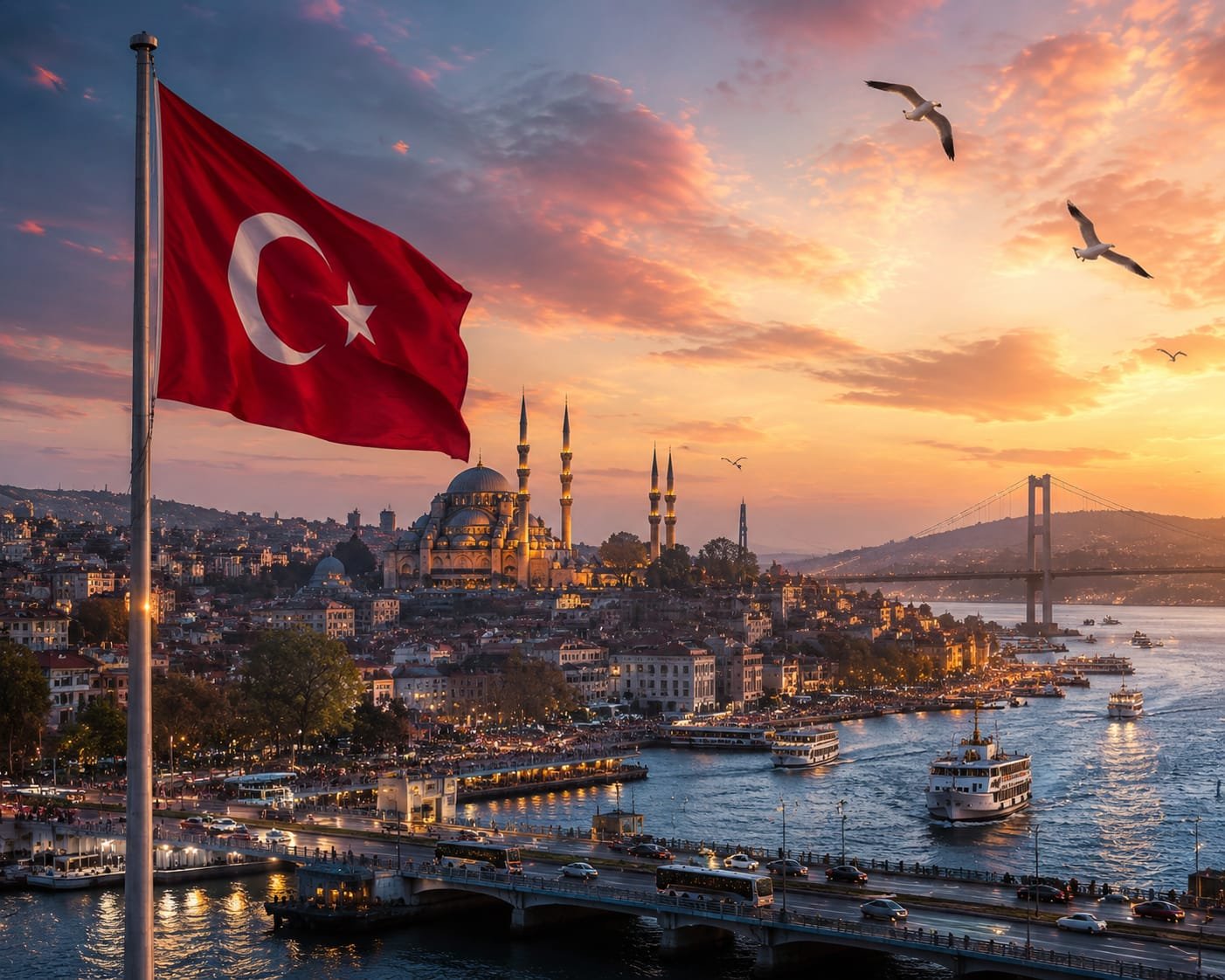
Turkey no longer sees itself merely as a country between Asia and Europe. It is positioning itself as a global transit hub, connecting East to West and North to South through an integrated network of ports, railways, highways, and energy lines.
This vision is not a set of isolated infrastructure projects—it is a massive geopolitical and economic strategy aimed at transforming Turkey into an indispensable node in global trade.
From a “Bridge” to a “Global Center”
For decades, Turkey was considered:
- A geographic corridor
- A bridge between continents
The new vision, however, aims to make Turkey a strategic operational hub for global trade, energy, and logistics.
In practice, any goods, energy, or commerce moving between:
- China and Europe
- The Gulf and Europe
- Central Asia and the Mediterranean
- The Caucasus and the Middle East
will be compelled to transit through Turkey.
Key Components of Turkey’s Vision
The Middle Corridor
East → West
One of Turkey’s most strategic projects, the Middle Corridor connects:
- China
- Central Asia
- Caspian Sea
- The Caucasus
- Turkey
- Then Europe
Why it matters:
- Shorter than traditional maritime routes
- Safer than the Russian route
- Faster for cargo transport
Following the Russia-Ukraine war and disruptions in global shipping lines, the world seeks a secure and fast alternative, and Turkey aims to be that solution.
The Development Route via Iraq
Gulf → Turkey → Europe
This economically critical route links:
- Iraq’s Al-Faw Port
- Iraq
- Turkey
- Europe
via railways, highways, and energy lines.
Economic benefits:
- Turkey becomes the Gulf’s gateway to Europe
- Generates billions in transit fees and logistics services
- Reduces dependence on the Suez Canal and geopolitically risky maritime lines
Railway Connections with Syria and the Gulf
Reviving the Hejaz Railway connects Turkey with:
- Syria
- Jordan
- Saudi Arabia
- Gulf countries
This project could reshape the entire overland trade map in the Middle East, speeding up goods transport, reducing costs, and increasing efficiency.
The Four Seas Project
This concept links:
- The Black Sea
- The Mediterranean
- The Caspian Sea
- The Gulf
into a unified transport and energy network, turning Turkey into a global logistics and energy hub, comparable to Singapore or the Netherlands—but on a larger geopolitical scale.
Zangezur & Caucasus Corridor
This project provides a direct link between:
- Turkey
- Azerbaijan
- Central Asia
without passing through Armenia or Russia in the traditional way.
Strategic significance:
- Strengthens Turkish influence in the Caucasus
- Integrates the Turkic world economically
- Speeds up eastbound trade flows
Major Economic Benefits for Turkey
1️⃣ Substantial transit fees for trains, trucks, energy lines, and ports provide continuous foreign currency revenue.
2️⃣ Turkey becomes a global logistics hub, attracting international shipping companies, massive investments, new industrial zones, and hundreds of thousands of jobs.
3️⃣ Supports the Turkish lira through increased trade, transit, and dollar flows.
4️⃣ Political and geopolitical power—control over trade and energy routes means global influence.
Challenges
- Regional tensions
- Syria’s unstable situation
- International competition
- Large-scale funding requirements
- Occasional US and Russian pressures
Despite these challenges, Turkey is moving quickly to establish a new reality before the global trade balance shifts completely.
Conclusion
Turkey is not only building highways and railways—it is creating a global economic influence network.
The ultimate goal is clear: Istanbul, Ankara, and Turkey at large will become:
- Trade hubs
- Energy hubs
- Decision-making centers
- Strategic gateways between Asia, Europe, and the Gulf
If successful in the coming decade, Turkey could transform into one of the world’s most important logistical and economic nodes.
By: Abdulaziz Kaşıfoğlu


Join The Discussion