


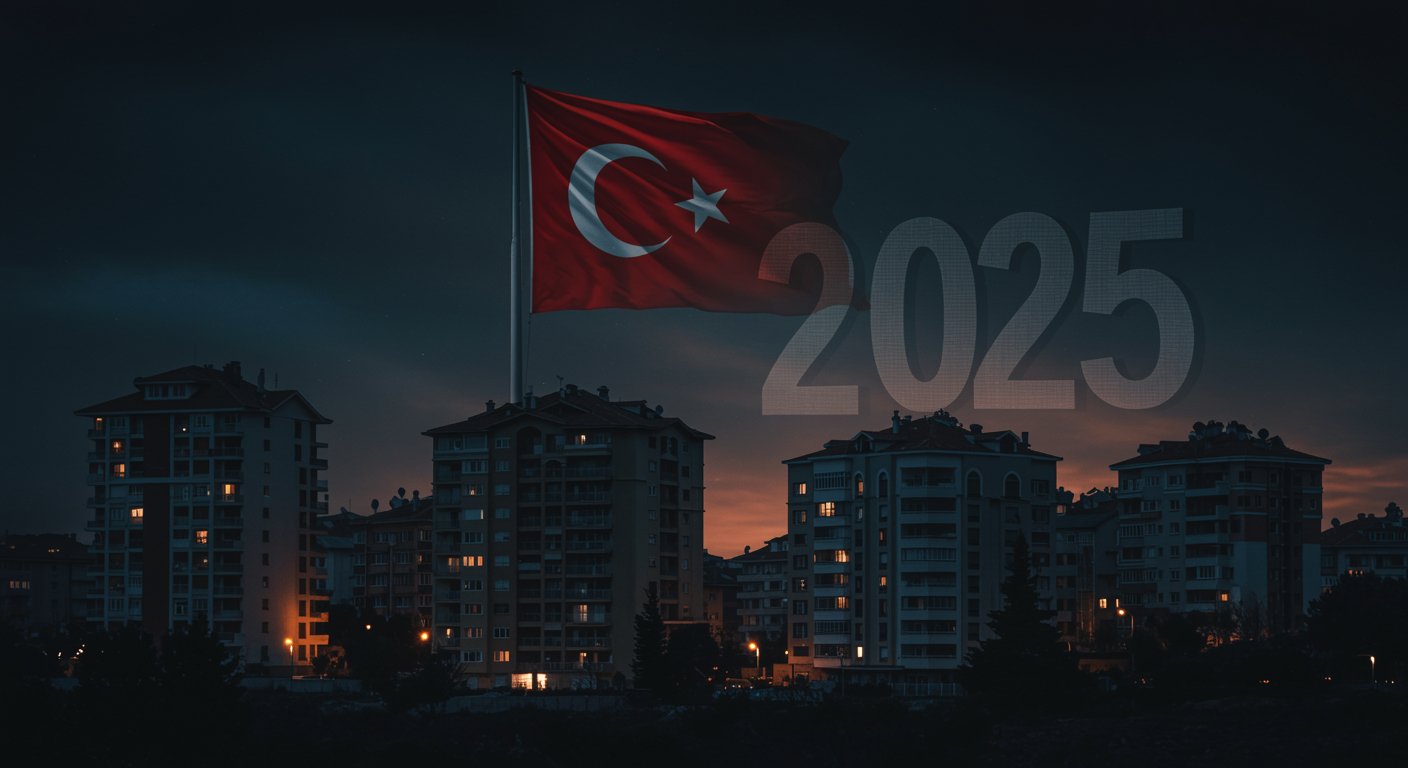
The year 2025 represents a pivotal phase in the trajectory of the Turkish economy, where more disciplined monetary policies intersect with signs of gradual recovery across several key sectors. The real estate market stands at the forefront of the sectors most affected by these shifts—whether in terms of domestic demand, foreign investor interest, or pricing trends and long-term investment strategies.
The Turkish Economy in 2025: Key Features
Throughout 2025, the Turkish economy continues its efforts to strike a balance between combating inflation and supporting economic growth. Key indicators point to:
- A relative improvement in economic confidence indices
- Gradual stabilization of the exchange rate compared to previous years
- The continued role of the construction sector as a key driver of growth
Collectively, these factors create a clearer economic environment, directly influencing purchasing and investment decisions in the real estate sector.
Interest Rates and Their Impact on the Real Estate Market
Monetary policy is one of the most influential factors shaping the real estate market in 2025.
While higher interest rates constrain domestically financed demand, they simultaneously:
- Encourage a shift toward cash purchases
- Increase interest among investors seeking value preservation
- Push a segment of buyers to explore lower-cost, more stable cities
This marks a clear transition from short-term speculation toward long-term real estate investment.
Inflation and Real Estate as a Hedging Tool
Despite ongoing efforts to curb inflation, real estate in Turkey continues to be viewed as one of the most effective tools for hedging against loss of value.
In 2025, investors increasingly regard property not merely as housing, but as an asset that preserves purchasing power—particularly in:
- Coastal cities
- Areas close to Istanbul
- Cities with a high quality of life
This trend supports steady demand for residential properties even amid market volatility.
The Construction Sector: A Strong Confidence Indicator
The solid performance of the construction sector in 2025 serves as a positive signal for the real estate market.
An increase in ongoing projects and building permits reflects:
- A gradual return of developer confidence
- A response to genuine demand rather than market speculation
- Greater focus on integrated residential projects
These dynamics contribute to a more mature and sustainable market structure.
Foreign Demand in 2025: Greater Selectivity
By 2025, foreign investors are no longer driven solely by low prices. Instead, they prioritize:
- Stability
- Location quality
- Lifestyle
- Long-term returns
This shift makes the Turkish real estate market more selective, favoring well-planned projects and regions that combine economic fundamentals with lifestyle appeal.
General Outlook for the Real Estate Market in 2025
Based on current economic indicators, the Turkish real estate market in 2025 can be summarized as follows:
- Slower but more stable growth
- Declining speculation and rising well-considered investment
- Greater emphasis on end-user housing and lifestyle-driven demand
- Continued perception of real estate as a relatively safe asset compared to other investment tools
Conclusion
The impact of the Turkish economy on the real estate market in 2025 reflects a transitional phase from volatility toward relative stability. Amid tighter monetary policies and a more informed investment approach, the real estate sector continues to affirm its position as a cornerstone of the Turkish economy—not only in numerical terms, but as a long-term investment haven within a changing regional landscape.



Join The Discussion