


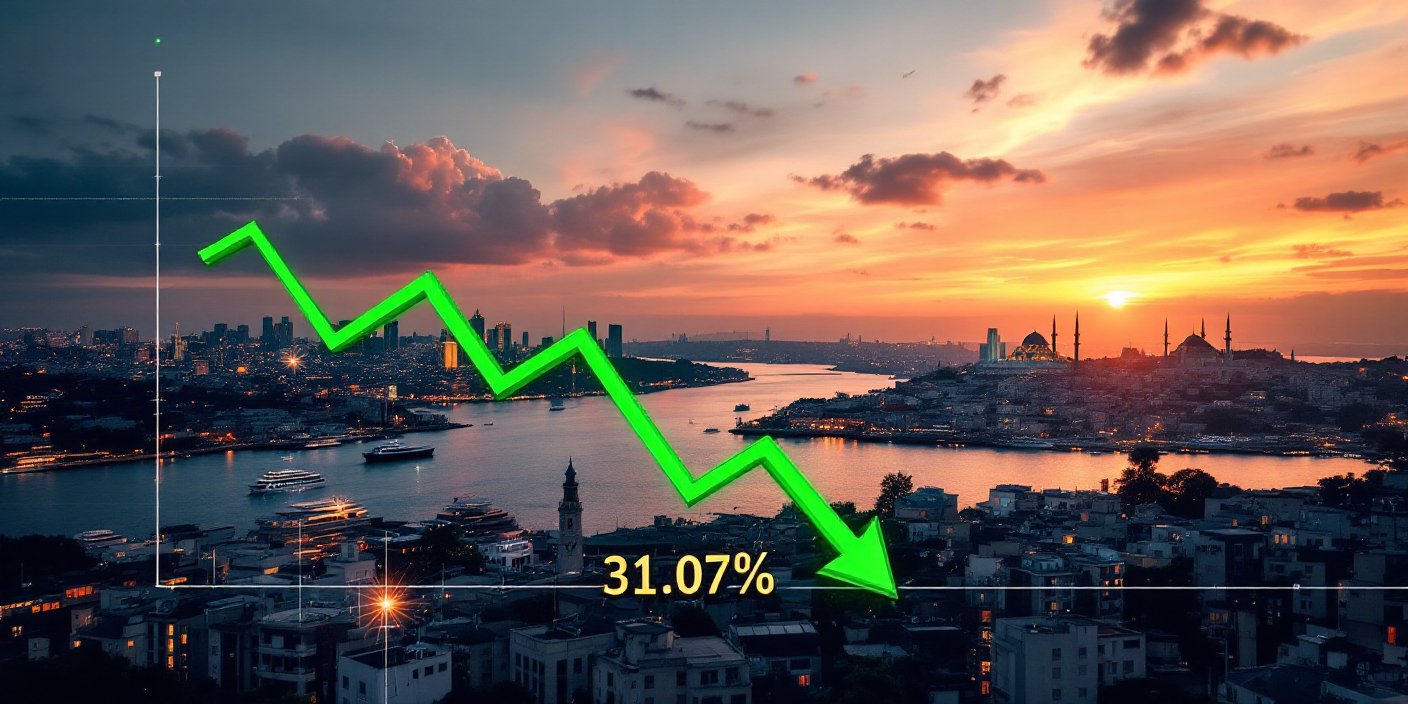
Recent data released by the Turkish Statistical Institute (TÜİK) showed that Turkey’s monthly inflation rate for November 2025 recorded an increase of 0.87%, while the annual rate dropped to 31.07%, marking the lowest level in four years.
This decline in inflation sends several positive signals for key economic sectors—especially real estate, investments, and financial markets. Here’s what these figures may indicate:
What Does the Decline in Inflation Mean?
• Reduced pressure on purchasing power:
Slowing price growth allows households and investors to gradually regain spending confidence.
• Signs of economic stabilization:
Lower inflation gives the Central Bank stronger control over interest rates and currency volatility, helping restore trust in the Turkish market.
• A solid environment for real estate investors:
Property becomes even more appealing as a safe hedge against inflation when price levels stabilize.
Impact on the Real Estate Market
With inflation standing at 31.07%:
• Investors are shifting toward long-term, high-return real estate instead of speculative short-term transactions.
• Cities with genuine buyer demand — such as those near Istanbul or areas with industrial/tourism growth — are becoming prime investment hubs.
• Trusted developers now have a strong opportunity to promote housing projects with secure returns and earthquake-resistant standards.
Challenges Still Exist
Despite the progress:
• A 31% annual inflation rate remains high compared to fully stabilized economies.
• Essential goods (food & energy) may stay under pressure even if overall inflation improves.
• Smart decision-making is crucial — not every property generates strong returns. Location, project quality, and developer credibility remain key.
Conclusion: Opportunity + Caution + Smart Strategy
The drop in inflation to 31.07% in November 2025 represents a significant investment window, especially in real estate.
Yet success depends on:
Choosing property in strategic, high-growth areas
Working with reputable developers
Focusing on long-term returns, not quick gains


Join The Discussion