


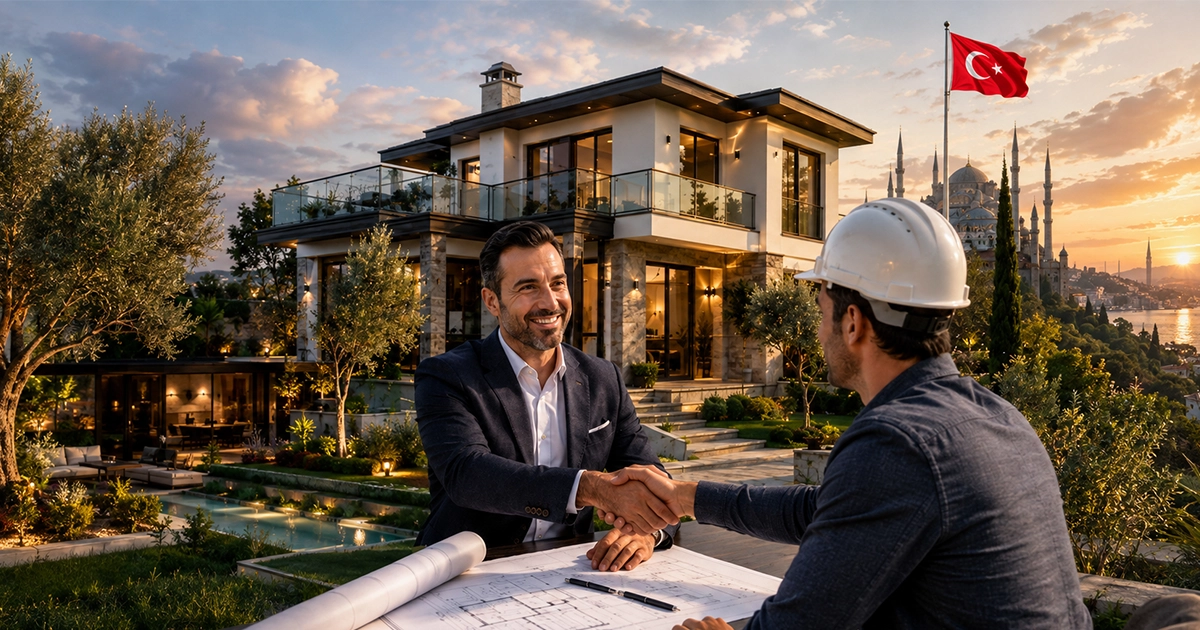
Building a villa or residential property in Turkey is an important project that requires careful engineering, legal, and financial planning. The success of the project does not depend only on choosing the land or design; it begins with selecting a reliable construction company capable of delivering the required quality within the agreed budget and timeframe.
1. Verify the Company’s Legal Status
Before signing an agreement, make sure the company is officially registered and has:
- A clear commercial name.
- A tax number and commercial registration.
- An official office address.
- A valid contractor authorization certificate.
- An authorized person who can legally sign the contract.
The company submitting the quotation should be the same company signing the contract and assuming responsibility for the construction work.
2. Review Previous Projects
Do not rely only on photographs and architectural renderings. Ask to visit projects previously completed by the company, preferably including:
- A completed project.
- A project currently under construction.
- A project similar to your property in size and design.
Examine the quality of the façades, insulation, flooring, doors, windows, kitchens, and bathrooms. It is also advisable to speak with a previous client to learn whether the company respected the agreed price, quality standards, and delivery date.
3. Make Sure There Is a Qualified Engineering Team
A reliable construction company should have a clearly structured team that includes:
- An architect.
- A civil or structural engineer.
- A project manager.
- A construction site supervisor.
- Electrical and mechanical specialists.
From the beginning, ask who will be responsible for communicating with you and overseeing the details of the project.
4. Do Not Start Before Studying the Land
Before determining the final construction cost, the land must be carefully evaluated, including:
- Zoning and development status.
- Permitted construction ratio.
- Number of floors and allowed building height.
- Required setbacks from the land boundaries.
- Soil conditions.
- Surrounding infrastructure.
- Requirements of the relevant municipality.
The architectural, structural, electrical, and mechanical plans should then be prepared according to the characteristics of the land and the owner’s requirements.
5. Request a Detailed Quotation
Do not accept only a total price. The quotation should clearly include the cost of:
- Excavation and foundations.
- Reinforced concrete structure.
- Walls and roofs.
- Insulation.
- Exterior façades.
- Electrical and plumbing systems.
- Doors and windows.
- Flooring and painting.
- Bathrooms and kitchens.
- Landscaping and boundary walls.
The quotation should also identify excluded works, taxes, fees, and utility connections so that unexpected costs do not arise during construction.
6. Define the Materials and Technical Specifications
The phrase “luxury finishing” is not enough. A clear specification schedule should identify:
- The type and thickness of insulation.
- Concrete and steel specifications.
- Window and glazing systems.
- Flooring and doors.
- Sanitary fixtures.
- Paint systems.
- Heating systems.
- Kitchen equipment and finishes.
Defining the materials in advance helps control quality and budget while reducing the risk of disagreements later.
7. Sign a Clear Contract
The construction contract should include:
- The details of both parties.
- The project location.
- The scope of work.
- The price and payment schedule.
- The construction period.
- Approved plans and specifications.
- The method for calculating additional works.
- Warranty conditions.
- Inspection and handover procedures.
- Procedures for delays or contract termination.
Payments should preferably be linked to actual construction milestones rather than dates alone.
8. Verify Permits and Quality Control Procedures
Make sure it is clear who is responsible for:
- Preparing the plans.
- Following up with the municipality.
- Obtaining the construction permit.
- Completing occupancy permit procedures.
- Conducting inspections and tests during construction.
The work should also be monitored at each stage, including the inspection of foundations, reinforcement steel, concrete, insulation, water pipes, and electrical installations before they are covered.
9. Do Not Automatically Choose the Cheapest Offer
The lowest-priced offer may exclude important works or depend on low-quality materials. Construction proposals should therefore be compared item by item, not only according to the final price.
The right price is the one that provides a balance between quality, clear specifications, construction time, and after-delivery service.
Warning Signs to Watch For
Be cautious when dealing with a company that:
- Refuses to provide legal documents.
- Requests a large payment before signing a clear contract.
- Provides a final price without studying the project.
- Does not specify the materials to be used.
- Refuses to arrange visits to previous projects.
- Does not have a clear project manager.
- Relies on verbal promises.
- Promises an unrealistic construction period.
Build Your Property with OmranTRK
At OmranTRK, we view construction as an integrated project that begins with studying the land and understanding the client’s needs, continues through design, planning, and construction management, and ends with the inspection and handover of the completed property.
Our work process may include:
- Studying the land and project requirements.
- Preparing the architectural concept.
- Coordinating the engineering plans.
- Preparing a detailed quotation.
- Defining materials and specifications.
- Monitoring each stage of construction.
- Controlling construction quality.
- Documenting the progress of the work.
- Inspecting the property before handover.
Choosing a reliable construction company in Turkey should not be based only on price or attractive images. You should verify the company’s legal status, experience, engineering team, previous projects, contract terms, and technical specifications.
Making the right choice from the beginning helps you build a safe, high-quality residential property that meets the agreed budget and delivery schedule.
To receive an initial assessment of your project and build your villa or residential property in Turkey, contact the OmranTRK team.
OmranTRK — From the idea and architectural plan to construction and final delivery.


Join The Discussion