


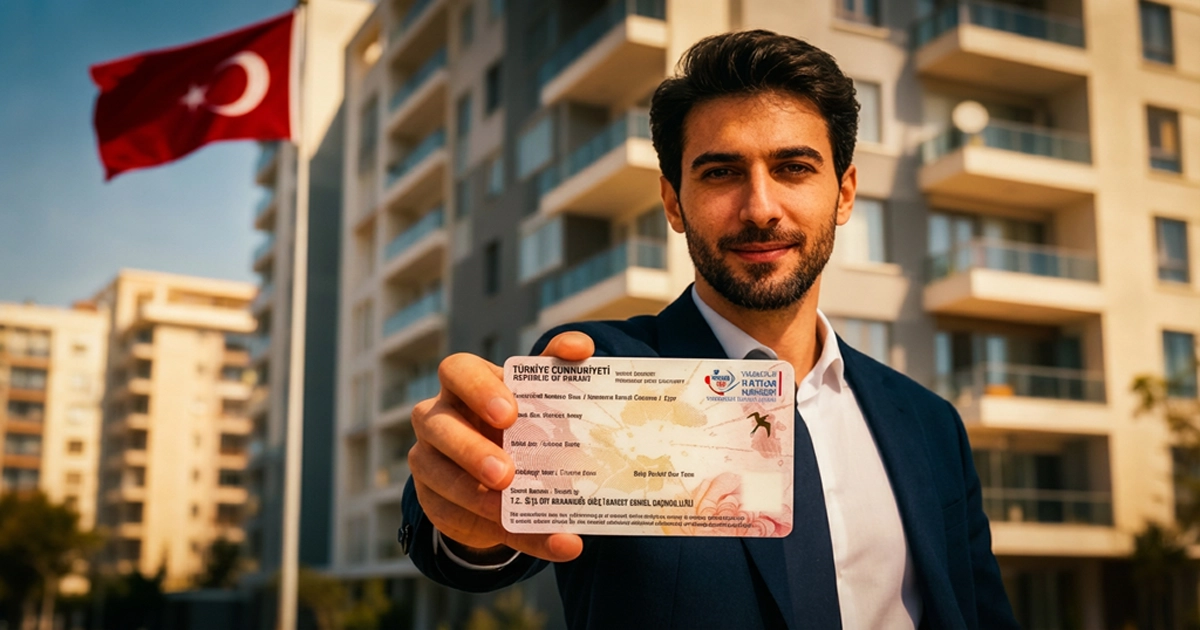
With the arrival of 2026, the rules regarding the real estate residence permit in Turkey have become clearer and more stable, following the amendments that came into effect in October 2023. Today, there are no longer multiple interpretations or wide exceptions, but rather a unified system applied to all new purchase transactions made by foreigners.
At Omran TRK, we observe that many investors still rely on outdated information. It is therefore important to clarify the situation accurately before making a purchase decision.
The Main Condition for a Real Estate Residence Permit in 2026
The condition currently in force is as follows:
- The value of the residential property must not be less than USD 200,000.
- This value must be officially recorded in the title deed (Tapu).
- The Central Bank of Turkey’s exchange rate on the day of property registration is the one that counts.
- The property must be officially classified as residential.
No external value outside the title deed is considered if the registered amount is below the required minimum threshold.
This means that financial planning must be based on the officially recorded value, not just the offer price or a verbal agreement.
Comparison Between the Previous System and the Current System
Previously:
- Lower value thresholds in some cities.
- Greater flexibility in property valuation reports.
- Less strict monitoring of the price registration mechanism.
Currently (2026):
- A unified minimum threshold of USD 200,000 for properties purchased after October 16, 2023.
- Full consideration of the value recorded in the Tapu.
- Stricter legal and financial scrutiny.
- Strict compliance with residential classification of the property.
This evolution reflects an official approach to organize the real estate market, prevent price manipulation, and ensure the entry of real and stable investments.
The Difference Between a Real Estate Residence Permit and Citizenship Through Investment
Many investors confuse these two concepts, whereas the difference between them is fundamental.
First: Real Estate Residence Permit
- Minimum amount: USD 200,000.
- Short-term residence permit (one or two years, renewable).
- Does not automatically grant the right to work.
- Does not confer citizenship.
- Valid as long as the property ownership is maintained.
In other words:
The residence permit gives you the right to legal residence and renewal, but it does not confer citizenship.
Second: Turkish Citizenship Through Real Estate Investment
- Minimum amount: USD 400,000.
- Commitment not to sell the property for 3 years.
- Wider security and administrative procedures.
- Obtaining full citizenship and a Turkish passport.
- Includes the spouse and children under 18.
Citizenship means full legal status as a citizen with all civil rights.
Investment Reading of the Market in 2026
Looking at real estate prices in major cities, the USD 200,000 threshold is no longer considered high compared to the actual average prices.
In many key areas, new apartments naturally exceed this amount, while some emerging areas still offer options close to the minimum required threshold.
The average annual rental yield generally ranges between 4% and 7%, depending on the location and type of project. This means the decision is not only a residence choice but also a long-term investment decision.
What Does This Mean for the Arab Investor?
- It is no longer possible to rely on a low-priced property to obtain a residence permit.
- It is essential to define the objective from the start: residence or citizenship.
- Study the value recorded in the Tapu before signing any contract.
- Choose a solid project that balances legal requirements and investment returns.
At Omran TRK, we believe that a successful real estate decision starts with a clear objective, then choosing the right project, and finally completing the procedures in a legally correct manner to ensure full investor protection.
The rules of 2026 do not represent a sudden change, but rather the consolidation of a more organized and transparent system.
The Turkish real estate market continues to offer strong opportunities, but with higher entry conditions and a more disciplined legal environment.
Today, success no longer depends solely on buying a property, but on selecting a well-considered investment based on a true understanding of the law and the market.



Join The Discussion